
Fixed Income vs Variable Income: Understand the Difference
Discover the main differences between fixed and variable income, and how to choose the best option for your financial profile.
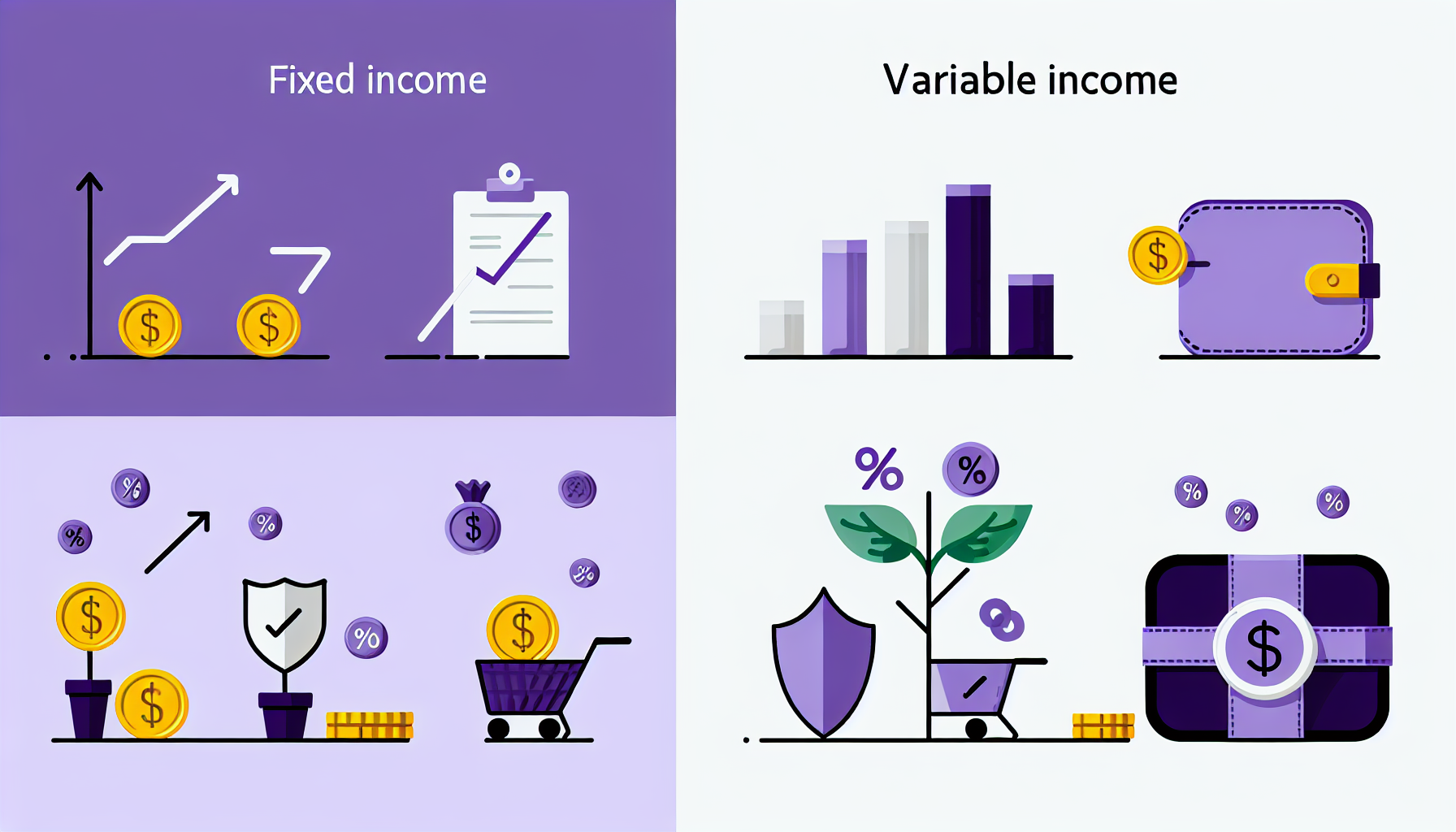
Introduction
When it comes to investing, understanding the differences between fixed income and variable income is essential for making more informed financial decisions. Each of these modalities has its characteristics, risks, and ways of generating returns. Let’s explore these concepts and help you choose what is best for your profile.
What is Fixed Income?
Fixed income consists of investments that have a predictable return, meaning you know exactly how much you will receive at the end of the investment period. Some common examples include:
- CDB (Certificate of Bank Deposit): Offers returns linked to the CDI and is issued by banks.
- Tesouro Direto: Government bonds that can yield according to the Selic rate or inflation.
- LCI (Real Estate Credit Letter): Investments aimed at the real estate sector, exempt from income tax.
These investments are ideal for those seeking safety and predictability. For example, if you invest R$ 10,000 (~$2,000) in a CDB that pays 100% of the CDI, and the CDI is 13.65% per year, at the end of one year you will have approximately R$ 11,365 (~$2,273).
What is Variable Income?
On the other hand, variable income includes investments that do not have a fixed return and can fluctuate over time. Examples include:
- Stocks: Shares in companies that can appreciate or depreciate.
- REITs (Real Estate Investment Trusts): Investments in properties that generate income through rents.
Variable income is suitable for those willing to take more risks in search of higher returns. For example, if you buy 100 shares of a company at R$ 20 (~$4) each, your initial investment is R$ 2,000 (~$400). If, after a year, the shares appreciate to R$ 30 (~$6), you could sell for R$ 3,000 (~$600), but if they depreciate to R$ 10 (~$2), your investment would be worth only R$ 1,000 (~$200).
Comparing Risk and Return
The main difference between fixed and variable income lies in the risk profile and the expected return:
- Fixed Income: Lower risk and predictable returns. Ideal for those averse to losses.
- Variable Income: Greater potential for returns, but with risks of significant losses. Ideal for those seeking capital growth.
When to Use Each?
The choice between fixed and variable income depends on your investor profile and your financial goals:
- Fixed Income: If you have a short-term goal, such as buying a car or traveling in a year, fixed income may be more suitable.
- Variable Income: For long-term goals, such as retirement or buying a house, variable income can offer greater growth of your wealth.
A good strategy is to diversify your investments, allocating part to fixed income and another part to variable income, according to your risk tolerance.
Final Considerations
Understanding the differences between fixed and variable income is fundamental to building an investment portfolio that meets your needs and financial goals. Assess your risk profile, define your objectives, and start investing consciously.
Now that you know more about the two types of income, how about taking the first step? Analyze your finances and start applying the 50/30/20 method to organize your financial life and invest better!
Was this article helpful?
Equipe ADXIS
A equipe de conteúdo do ADXIS escreve sobre organização financeira, investimentos e comportamento com dinheiro.